
Build Guide: Fairway, Kansas
Fairway, Kansas is a city of about 4,170 residents on roughly 1.1 square miles in northeast Johnson County, tucked between Mission Hills, Westwood, Roeland Park, and Prairie Village and a few minutes west of State Line Road. It is a separate municipality with its own building permits and ordinances, not a neighborhood of Kansas City, and not to be confused with the Fairway Hills or Fairway Meadows subdivisions elsewhere in the metro.
Faust Construction builds new homes, additions, and whole-house renovations in Fairway and the surrounding northeast Johnson County cities of the Kansas City metro.

What defines Fairway
Fairway sits in the belt of small northeast Johnson County cities that J.C. Nichols shaped in the 1930s and 1940s, laid out near a golf course and named for it. It incorporated in 1949, the same year as Westwood and Westwood Hills, and it has kept the same footprint since: a little over a square mile of curving, heavily canopied streets that the city itself markets as the City of Trees.
The Shawnee Indian Mission, a National Historic Landmark founded in 1839 and now operated as a museum in partnership with the city, sits in the middle of it. Johnson County’s own historic resources survey puts Fairway alongside Westwood, Westwood Hills, Roeland Park, and Prairie Village as the models of postwar suburban life in the metro, with Colonial Revival and Tudor Revival dominating the Nichols-era stock and a documented cluster of Art Moderne houses from the mid-1930s.
That inventory is why most work in Fairway is renovation, addition, and the occasional teardown rebuild rather than greenfield construction. There is essentially no vacant land, and the trees are older than the houses.

What homeowners should know
Fairway has no architectural review board, but it protects its street trees more aggressively than any of its neighbors and it penalizes unpermitted work hard. The requirements below come from the city’s Building Permits page and its published ordinances.
There is no design review board, but there is a Planning Commission
Fairway publishes no architectural review board, design review committee, or historic preservation commission for residential exterior work. The bodies a project can reach are the Planning Commission and the Board of Zoning Appeals, and only when the design cannot meet a standard. Both require applications and plans at least 30 days before the meeting date.
That makes Fairway a permit-review city rather than a design-review city, which is a real difference from Mission Hills next door. It does not make it a permissive one.
Street trees are the expensive part
Any tree within ten feet of the curb has to be fenced and protected during construction, with a four-foot barrier covering at least 75 percent of the drip line. Removing a right of way tree requires city authorization and a payment to the Fairway Tree Fund of 100 dollars per diameter inch measured at breast height, on top of potential administrative fines of 500 dollars.
On a mature street tree that arithmetic gets serious quickly. A 30-inch trunk is a 3,000 dollar payment before anything else. This is the single line item most likely to surprise an owner who has only built in Overland Park or Leawood.
New construction and demolition have to be fenced and screened
Ordinance 1805 requires that new home construction and demolition sites be enclosed with chain link fence at least 72 inches and no more than 84 inches tall, overlaid on the exterior with a vinyl screen. This is a site logistics requirement, not a design one, and it needs to be in the budget and the site plan from the start.
Working without a permit costs triple
The city states it plainly: no work is to take place without an issued building permit card posted at the property, and work without a permit results in a stop work order and triple the permit fee. Permit applications must list every subcontractor with license numbers, along with the total construction value.
Permits are required for new home construction, demolition of an existing structure, additions, and anything needing Planning Commission or Board of Zoning Appeals approval. Applicants are also responsible for complying with all city, county, state, and federal rules on grading, flooding, drainage, water, sewer, zoning, driveways, and rights of way.
Contractors are licensed through Johnson County
Fairway relies on the Johnson County Contractor Licensing Program, which issues eleven license types. The one that covers most residential work is Class C Residential, which permits framing, roofing, pools, non-structural remodeling, and repairs on single-family and two-family houses. Class B covers buildings up to three stories and Class A covers any structure.
What we did not put on this page
Fairway’s zoning setbacks, height limits, lot coverage, impervious surface caps, permit validity period, adopted code edition, and demolition notice requirements are published in Chapter 15 of the municipal code on Municode and in the city’s Residential Plan Submittal Packet. Both are behind interfaces we could not read directly, so rather than publish numbers we could not verify against the source, we have left them out. Call the city at (913) 262-0350 or request the submittal packet before setting a design against assumed numbers.
| Fairway requirement | What it is |
|---|---|
| Right of way tree removal | $100 per diameter inch to the Fairway Tree Fund |
| Tree protection fencing | 4 ft. barrier over 75% of the drip line, trees within 10 ft. of curb |
| Construction site fencing | 72 to 84 in. chain link with exterior vinyl screen |
| Work without a permit | Stop work order plus triple the permit fee |
| Planning Commission or BZA | Application and plans 30 days before the meeting |
| Contractor licensing | Johnson County license, by class |
Why Fairway projects take local experience
Faust Construction has built in the Kansas City metro for more than 25 years. Fairway is a small city with a short list of rules that carry real money, and the two that matter most are both about the site rather than the house: the tree fund payment on any right of way tree, and the screened construction fence that has to go up before work starts.
Our pre-construction phase is where those get priced. We work alongside the architect and homeowner before construction begins, walking the site with the tree line in mind, confirming subcontractor licensing so the permit application is complete on the first pass, and building a schedule that accounts for the 30-day Planning Commission window if the design needs one.
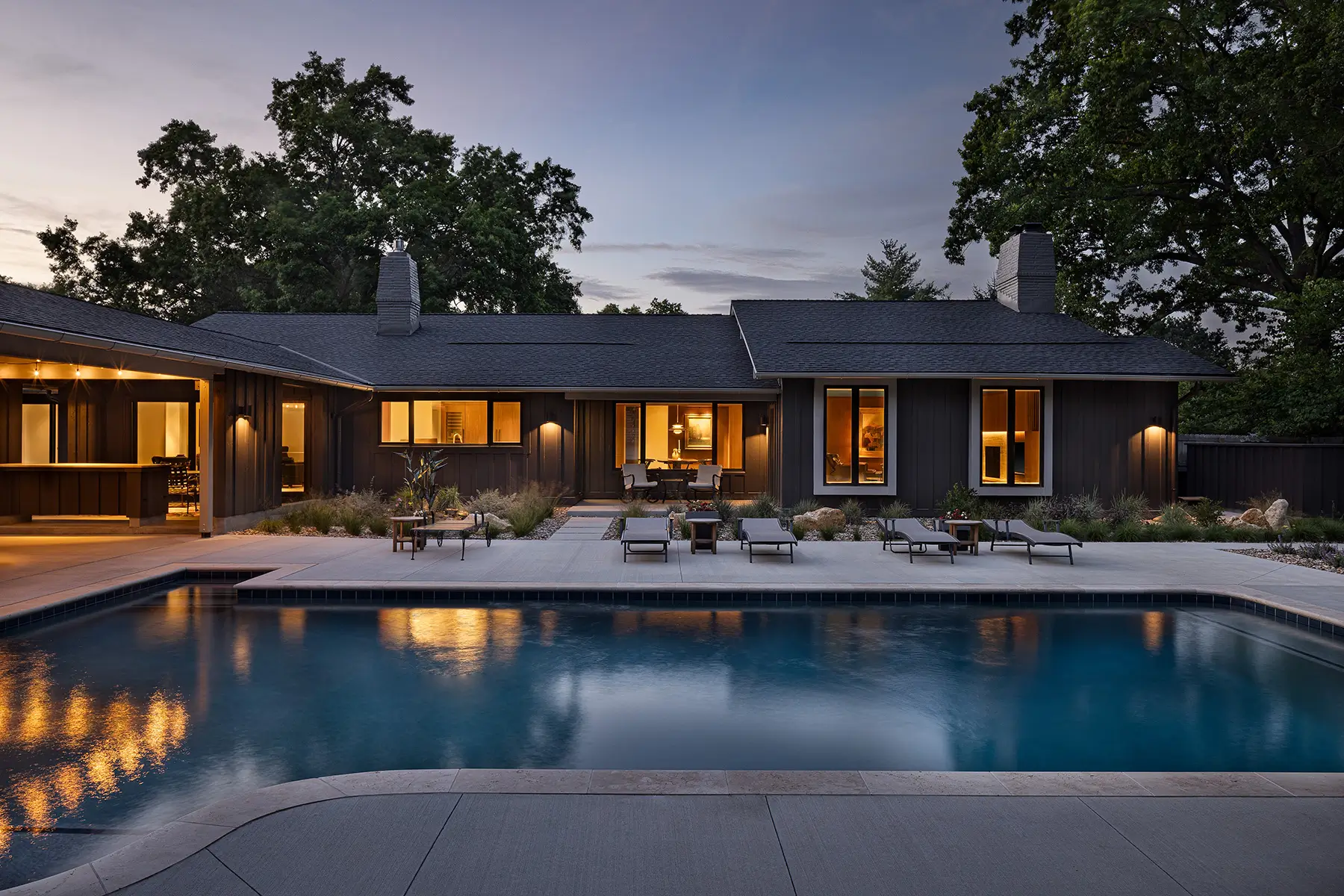
Pre-construction
We price the design, evaluate materials and alternatives, and build a schedule that accounts for city review milestones.
Construction
We work with a consistent group of craftsmen and trade partners, with daily on-site presence throughout the build.
Management
We track cost against budget transparently and meet monthly with the architect and homeowner.
What we build in Fairway
Fairway is fully built out with mid-century and Nichols-era houses, so the work here is almost entirely about what to do with a good older house on a good older lot.
- Additions. Kitchen, primary suite, and living space expansions on compact lots, planned around the mature canopy rather than through it.
- Whole-house renovations. Reworking layout, systems, and finishes in a Colonial Revival, Tudor, or ranch while keeping the street-facing character intact.
- Interior renovations. Kitchens, baths, and basement finishes where the exterior and the trees are untouched.
- New construction and rebuilds. Replacement houses on existing lots, where the demolition fencing requirement and the tree fund both apply from day one.
Our completed work spans new construction, additions, and full renovations across the Kansas City metro. Fairway sits inside our regular service area alongside Mission Hills, Westwood, Prairie Village, Leawood, Overland Park, and the Kansas City, Missouri neighborhoods along Ward Parkway.

Recent work
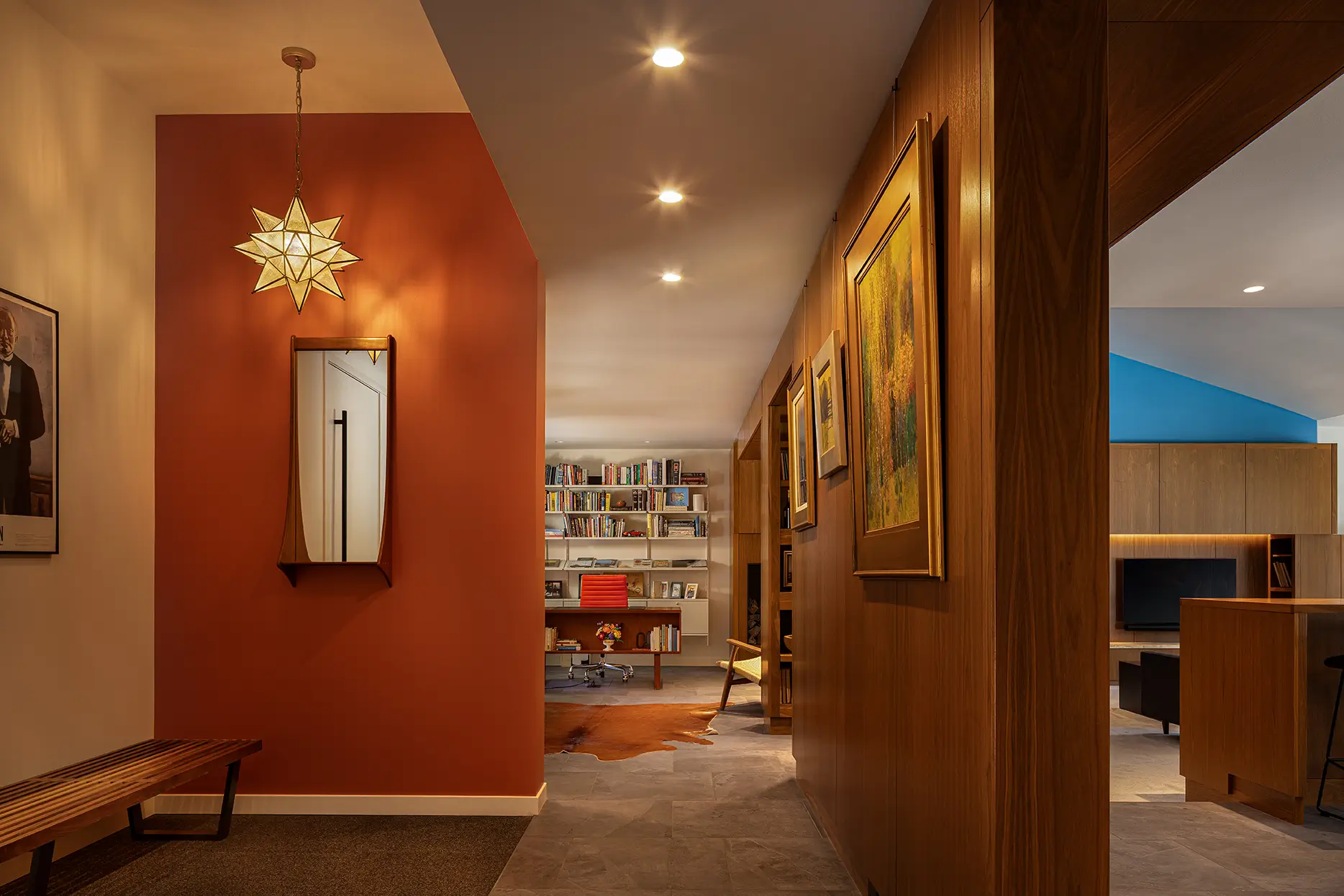
Browse new construction, additions, and full-home renovations from across the Kansas City metro, including projects in established neighborhoods that share this area’s scale and housing stock.

Questions about building here
Answers to what homeowners ask before starting a project in this area.
Is Fairway, Kansas part of Kansas City?
No. Fairway is an independent city in Johnson County, Kansas, incorporated in 1949, with about 4,170 residents on roughly 1.1 square miles. It sits in the Kansas City metro between Mission Hills, Westwood, Roeland Park, and Prairie Village, a few minutes west of State Line Road, but building permits and ordinances come from the City of Fairway, not from Kansas City.
Does Fairway have an architectural review board?
No. Fairway publishes no architectural review board, design review committee, or historic preservation commission for residential work, which is a real difference from Mission Hills next door. The bodies a project can reach are the Planning Commission and the Board of Zoning Appeals, and only when a design cannot meet a standard. Both require applications and plans at least 30 days before the meeting date.
How much does it cost to remove a tree in Fairway, Kansas?
For a tree in the public right of way, removal requires city authorization and a payment to the Fairway Tree Fund of 100 dollars per diameter inch measured at breast height, plus potential administrative fines of 500 dollars. A 30-inch trunk is therefore a 3,000 dollar payment. Trees within ten feet of the curb must also be protected during construction with a four-foot barrier covering at least 75 percent of the drip line.
Does Fairway require construction fencing?
Yes. Under Ordinance 1805, new home construction and demolition sites in Fairway must be enclosed with chain link fence at least 72 inches and no more than 84 inches tall, overlaid on the exterior with a vinyl screen. It is a site requirement rather than a design one, and it belongs in the budget and the site plan from the start.
What happens if you build without a permit in Fairway?
The city states it plainly: work without a permit results in a stop work order and triple the permit fee. No work is to take place without an issued building permit card posted at the property. Permit applications must also list every subcontractor with license numbers along with the total construction value, so an incomplete application delays issuance.
Does Faust Construction build in Fairway, Kansas?
Yes. Faust Construction is a Kansas City metro custom home builder and remodeler working in Fairway along with Mission Hills, Westwood, Prairie Village, Leawood, Overland Park, Brookside, and the Country Club Plaza area. Brian Faust founded the company more than 25 years ago, and it builds new homes, additions, and full-home renovations.
Ready to build your dream home?
Every project starts with a conversation